

Sabbir
ADMIN
Sep 27, 2026
In today’s digital-first world, businesses need more than just an online presence—they need digital solutions that make it easier to connect with customers, manage operations, and drive growth.
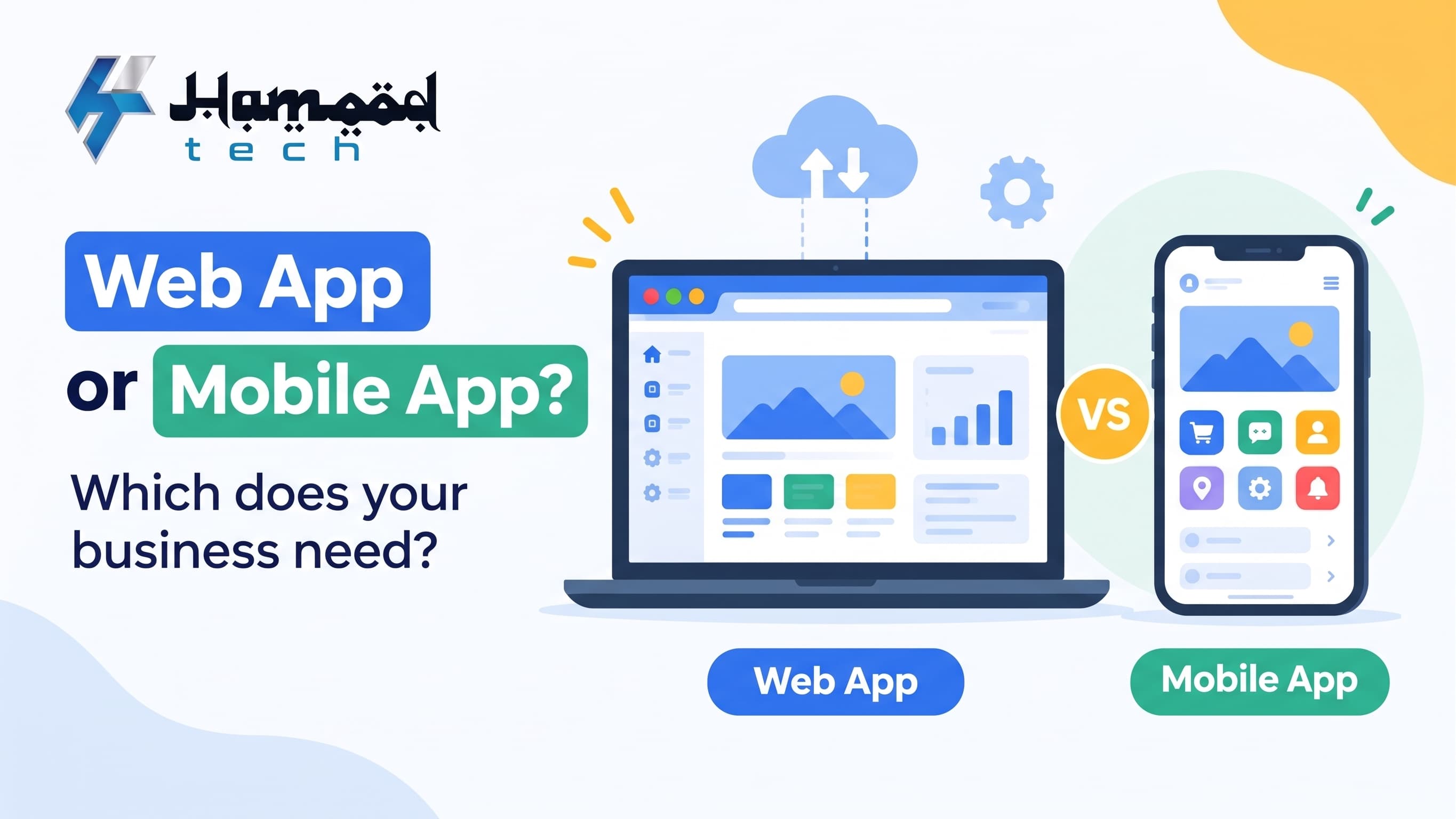
One common question businesses face is: Should we build a web app or a mobile app?
The answer depends on your business goals, target audience, budget, and the type of experience you want to provide. Let’s explore the key differences and help you understand which solution may be right for your business.
What Is a Web App?
A web application is software that runs through a web browser. Users can access it from devices such as computers, tablets, and smartphones without installing an application.
Examples include online banking platforms, project management tools, e-commerce dashboards, booking systems, and customer portals.
Benefits of a Web App
Accessible Anywhere: Users can access your application from almost any device with a browser and internet connection.
No Installation Required: Customers don't need to download an app before using your service.
Easier Updates: Changes and improvements can be deployed centrally without requiring users to update an app.
Cross-Platform Compatibility: A single web application can support multiple operating systems and devices.
Cost-Effective Development: For many businesses, one responsive web app can be more economical than developing separate native apps.
What Is a Mobile App?
A mobile app is specifically designed for smartphones and tablets, typically distributed through platforms such as Android and iOS.
Mobile apps can provide deeper integration with device features such as cameras, GPS, notifications, biometrics, and offline functionality.
Benefits of a Mobile App
Better Mobile Experience: Apps can be designed specifically for smartphone and tablet users.
Push Notifications: Businesses can send timely updates, offers, reminders, and alerts.
Device Features: Mobile apps can utilize features such as GPS, cameras, contacts, and biometric authentication.
Offline Capabilities: Some app functionality can remain available even without a continuous internet connection.
Customer Engagement: A dedicated app can create a direct and convenient channel between your business and customers.
Web App vs. Mobile App: Which One Should You Choose?
There is no universal answer. The right choice depends on what your business actually needs.
FactorWeb AppMobile AppAccessibilityExcellentRequires installationDevelopmentOften simplerCan require platform-specific developmentUpdatesInstant for usersMay require app updatesDevice FeaturesMore limitedStrong integrationPush NotificationsLimitedExcellentOffline FeaturesPossible, but limitedStronger potentialMobile ExperienceResponsiveHighly optimized
When Should Your Business Choose a Web App?
A web app may be the better option if:
Your customers use multiple types of devices.
You want users to access your service without downloading an app.
Your business needs an online dashboard or management system.
You want easier deployment and updates.
You are launching a new digital product and want to validate the idea first.
Your target audience primarily accesses your service through browsers.
For example, an e-commerce platform, business management system, booking platform, or customer portal can often work effectively as a web application.
When Should Your Business Choose a Mobile App?
A mobile app may make more sense if:
Your customers primarily use smartphones.
Push notifications are important to your business.
Your application needs GPS, camera, biometrics, or other device features.
You want frequent customer engagement.
Offline functionality is important.
You want to create a highly personalized mobile experience.
For businesses such as food delivery, transportation, fitness, retail, and customer loyalty platforms, mobile apps can provide valuable functionality and convenience.
Why Not Both?
For some businesses, the best solution isn't choosing between a web app and a mobile app—it is using both.
A web application can provide broad accessibility and powerful management features, while a mobile application can deliver a convenient, personalized experience for customers.
For example, an e-commerce business might use:
A web application for customers who prefer shopping through browsers.
A mobile app for frequent customers who want faster access and personalized notifications.
An admin dashboard for managing products, orders, inventory, and customers.
This approach can create a connected digital ecosystem around your business.
How Hamood Tech Can Help
Choosing the right technology isn't just about following trends. It’s about understanding your business objectives, customers, workflow, and future growth.
Hamood Tech helps businesses transform ideas into practical digital solutions through:
Custom Web Application Development
Mobile App Development
UI/UX Design
API & Backend Development
Business Software Solutions
IT Consulting
Cloud & Digital Solutions
Our team can help you evaluate your requirements and determine whether a web app, mobile app, or combined solution is the right fit for your business.
Final Thoughts
A web app offers accessibility, flexibility, and easy deployment, while a mobile app can provide deeper device integration and stronger mobile engagement.
The right choice depends on your business model, users, functionality, budget, and long-term goals.
Before investing in development, define what problem you want to solve and how your customers will use your product. With the right technology strategy, your digital solution can become a powerful tool for business growth.
Ready to Build Your Digital Solution?
Have an idea for a web or mobile application?
Let Hamood Tech turn your idea into a powerful digital reality.
🌐 Website: https://hamoodtech.com/
💬 Explore our services and start building your next digital solution with Hamood Tech.
#HamoodTech #WebDevelopment #MobileAppDevelopment #SoftwareDevelopment #WebApp #MobileApp #ITConsulting #DigitalTransformation